
If you or your child were hurt on a trampoline, a legal claim may exist when someone owed a duty of care and failed to meet it, or when a defective trampoline caused the injury. Who may be responsible depends on where it happened, what failed and the law of that state. A signed waiver does not settle the question everywhere.
This guide is for people hurt at a trampoline park or on a backyard trampoline, for parents whose child was injured, and for families after a death. Most people facing this are dealing with medical visits, missed work and a hard question: was this simply bad luck, or did someone fail to do their part? What follows covers where these injuries happen, the legal theories that may apply, waivers, who may be responsible, children, evidence, losses and how state law differs.
Hurt at a Park or in a Backyard? Where Trampoline Injuries Happen and What Kind of Claim May Follow
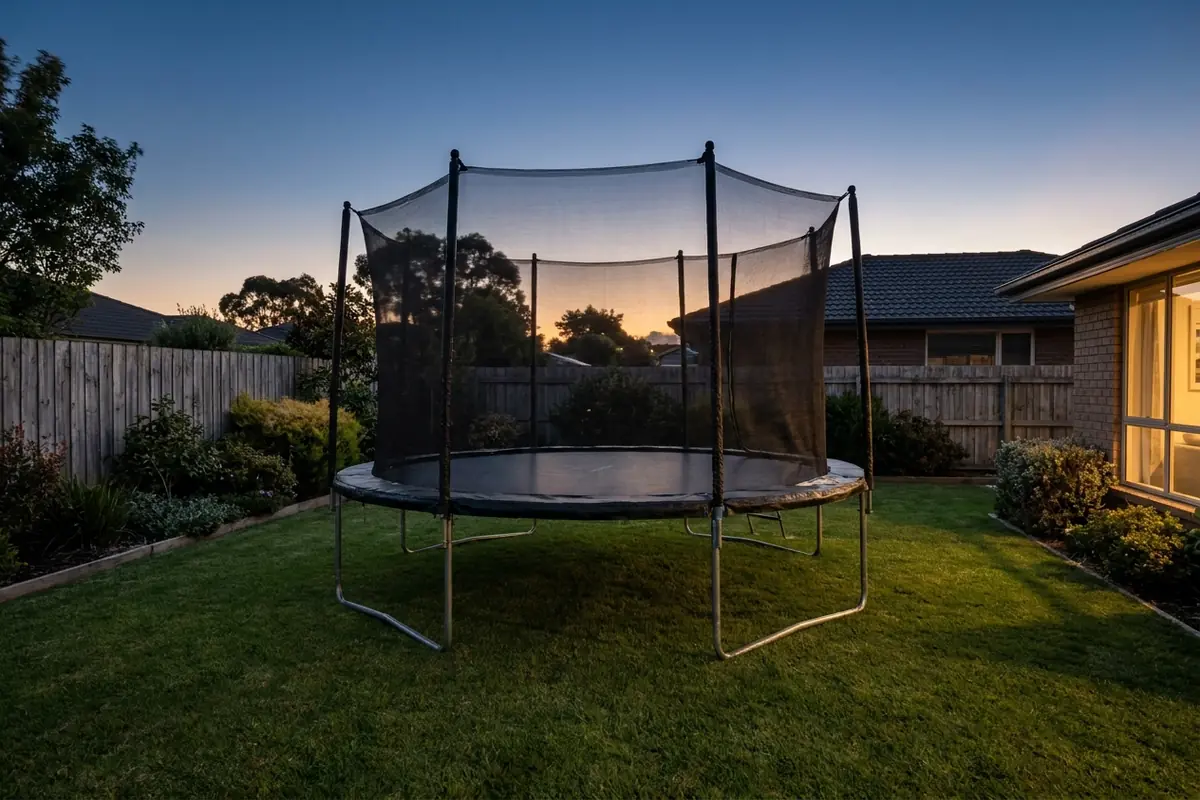
The first thing that shapes a claim is where it happened. Commercial trampoline parks are indoor facilities open to the public for a fee. Backyard or home trampolines are privately owned equipment on residential property. The setting shapes who may be responsible and what an injured person or family may need to show.
Three legal theories come up most often. Premises liability covers the duty of a property owner or operator. Negligent supervision means a failure to supervise participants or keep conditions safe. Product liability covers a defect in the trampoline or one of its parts. A single accident can involve more than one theory. A park injury, for example, might raise questions about staffing and also about a torn mat.
So the question is rarely just "whose fault was it?" but which theories fit the facts, since each points to different people and different proof. State law governs most of these claims, and the rules differ from state to state, so the same kind of accident can be treated differently depending on where it happened. The site's guide to a trampoline park injury claim goes deeper into the commercial setting.

Premises Liability: What a Trampoline Park or Property Owner Owes Visitors
Premises liability is the legal obligation of a property owner or operator to keep reasonably safe conditions for the people who come onto the property. At a commercial park, paying customers are usually business invitees.
An injury alone does not prove that anyone was at fault. A premises liability claim has to show four things: a duty owed, a breach of that duty, causation and damages. Whether each is met depends on what actually happened.
At a park, the conditions that often come under scrutiny include:
- whether the equipment was maintained, and whether padding and enclosures were in place
- what rules were posted, and whether they were enforced
- how staff were trained, and how participants were supervised
- how crowds and jumpers of different sizes were managed
A backyard is different. A homeowner's duty to guests, including visiting children, varies by state. Many states sort visitors into categories such as licensees and invitees, and each category carries a different duty. For a person hurt at a friend's or neighbor's home, the question is often how that state treats the visit and what duty followed.
You Signed a Waiver at the Door — Does That End Your Claim?
Many people sign a document at a park's front desk or on a kiosk, often for a child, and later wonder whether that signature closed the door. A waiver or release is a document signed before participation that tries to release the operator from liability for injuries. Courts sometimes call it a participation agreement.
A waiver is not automatically enforceable in every state. Courts look at whether the language is clear, whether it covers the specific conduct at issue and whether the state's public policy limits enforcement. Many states do not allow a waiver to bar a claim based on gross negligence, which means conduct far below ordinary care, or based on willful or wanton conduct.
The treatment of a parent's signature on a child's waiver varies significantly by state. Some states hold such waivers unenforceable as to the child's own claims, and others treat them differently. Because the answer turns on one state's law and the exact wording, no single rule describes every case. The site's page on trampoline park waivers explains how different courts have treated these documents.
Who May Be Responsible for Your Injury
Responsible parties are identified by their role, not by assumption. Depending on the facts, they may include:
- the operator of a commercial trampoline park, which may be a different business from the one that owns the property
- the property owner, such as a landlord or building owner
- the trampoline manufacturer
- the maker of a component such as springs, enclosure netting or the frame
- a seller, distributor or importer, because in many states the chain of distribution can be relevant
- a maintenance or inspection company, if a third party serviced the equipment
Claims against manufacturers and sellers rest on product liability, which is liability for a defective product that causes injury. If the trampoline itself failed, the question is which kind of defect was involved: a design defect (a flaw in how the product was designed), a manufacturing defect (a flaw in how a particular unit was made) or a failure to warn (the absence of adequate instructions or warnings).
When Your Child Was Hurt: Injuries to Children and the Attractive Nuisance Doctrine
When a child is hurt, the law in many states applies its own rules. One is the attractive nuisance doctrine. In many states, a landowner may owe a duty of care to child trespassers if the property has a condition that is likely to attract children and poses an unreasonable risk of harm. The elements vary by state. A backyard trampoline can raise this question when a child enters without permission.
Evidence That Usually Matters in a Trampoline Injury Case
The evidence that exists, and when it is gathered, can affect what a claim is able to show. Equipment can be repaired or replaced, footage can be overwritten and memories fade, so a gap in the record can make a duty, a breach, a defect or causation harder to establish later. The records that usually matter include:
- medical records documenting the injury, the treatment and the prognosis
- photographs and video of the scene, the equipment and the injuries, including any surveillance footage
- the trampoline or the part that failed, which in a product liability case may be the central proof of a defect
- incident reports filed by the park or the property owner
- the names and contact details of witnesses
- purchase or rental records, receipts or order history, which can help identify the manufacturer or seller
- the waiver or participation agreement signed at entry, since its exact wording shapes the waiver analysis
A park's own record of what happened can carry particular weight. The site's guide to a trampoline park incident report explains what that record is.
Injuries, Losses, and What Damages Law May Allow
The law sorts the costs of an injury into two groups. Economic damages cover the bills and lost pay: past and future medical expenses, lost income or earning capacity, and rehabilitation costs. Non-economic damages cover what the injury took from daily life: pain and suffering, emotional distress and loss of enjoyment of life. In a wrongful death case, the categories vary by state and may include funeral and burial expenses, loss of financial support and loss of companionship. Medical records and bills are often how these losses are shown, which is one reason the evidence above matters.
Fault rules also affect what a person may recover. Comparative fault, used in most states, reduces a plaintiff's recovery by that person's percentage of fault for the accident. A few states use contributory fault, which may bar recovery entirely if the injured person was at fault to any degree. A parent watching bills arrive may wonder whether a child's jump counts against the claim; the answer depends on which rule the state uses. Any recovery also depends on a claim being filed in time, as the next section explains. The page on a trampoline injury settlement explains how these pieces fit together.
How State Law Differs — and Why It Matters for Your Claim
The state where the injury happened decides most of the rules. A statute of limitations is the deadline for filing a lawsuit. After it passes, a court will typically dismiss the claim. The period varies by state and by the type of claim, so personal injury, wrongful death and product liability deadlines may differ. Some states also set shorter deadlines for claims against government-owned facilities.
Most states use some form of comparative fault, either pure or modified, and a small number use contributory fault. Some states cap non-economic or total damages in personal injury cases. Wrongful death rules, including who may sue and what may be recovered, differ as well, as does waiver enforceability.